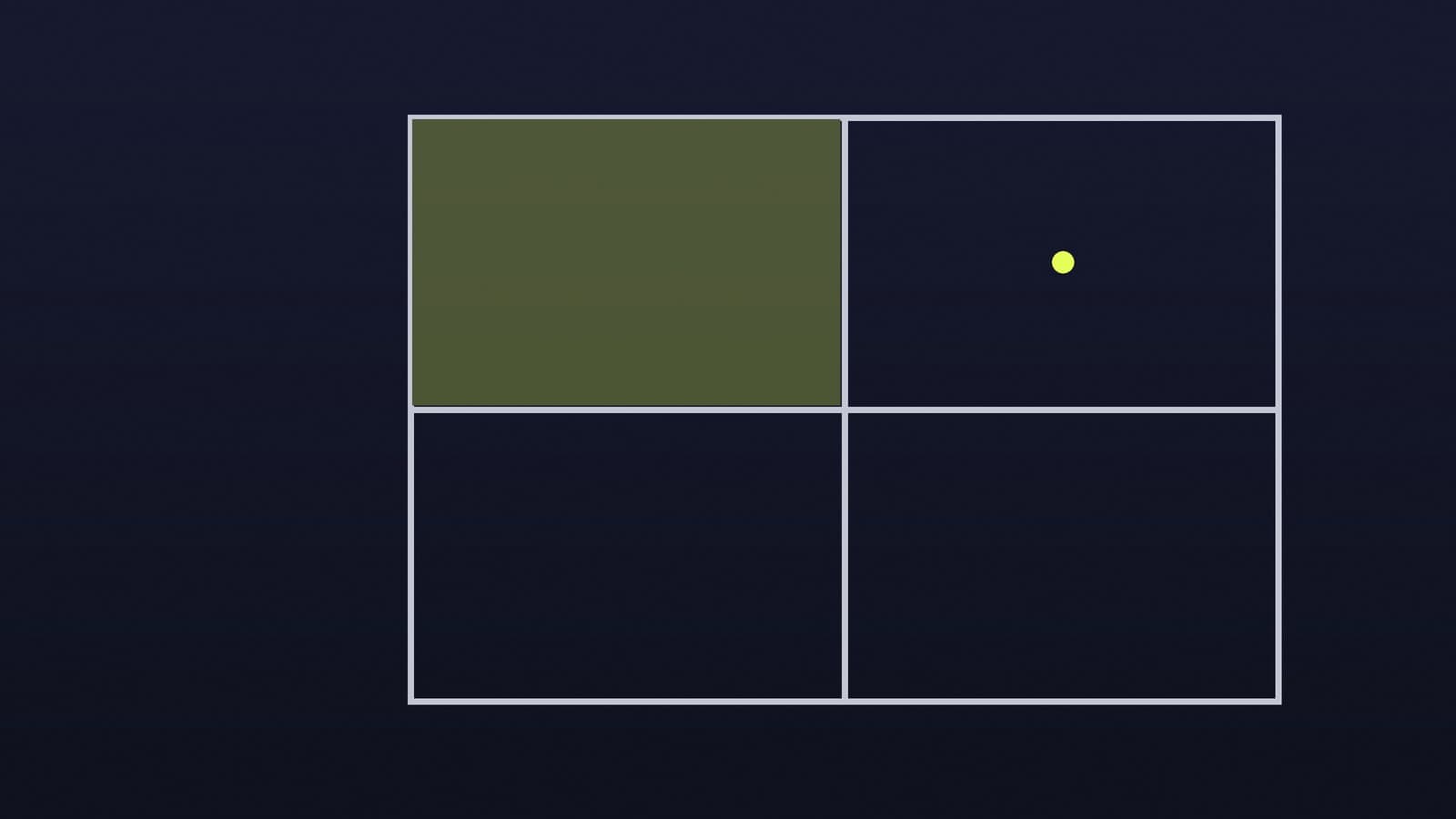
Almost every manager can sketch the Johari window on a whiteboard. Almost none has actually run the exercise. There is a real difference between knowing the model and sitting across from a colleague who hands you an adjective you didn't choose for yourself — that second experience is where the learning happens. This guide gives you three ways to run it for real: a 30-minute solo protocol, a pair version, and a 60–90 minute team workshop, with the scripts, the grid, and the facilitation mistakes to avoid.
What does the exercise actually measure?
The model behind the exercise comes from Joseph Luft and Harrington Ingham, who introduced it in 1955 as a graphic model of interpersonal awareness (Luft & Ingham, 1955). Two questions cross: what do I know about myself, and what do others know about me? The result is four panes: open (known to both), hidden (known only to me), blind (known only to others), and unknown (known to no one). If the theory is new to you, start with our primer on the Johari window — this article is about running it, not explaining it.
The exercise has one goal: enlarge the open pane, because that is where trust and effective collaboration live. There are exactly two levers. Disclosure shrinks the hidden pane — you choose to share something. Feedback shrinks the blind pane — someone shows you what you couldn't see. The blind pane is where the highest-value discoveries sit, which is why this exercise is one of the most direct tools for surfacing leadership blind spots.
In practice, the exercise operationalizes all of this with a simple mechanic: a fixed list of adjectives, chosen once by you and once by others, then sorted into the grid.
The official 56 adjectives
The classic exercise uses this list of 56 adjectives. Everyone — you and your reviewers — picks 5 or 6 that best describe you, from this list only:
Able, Accepting, Adaptable, Bold, Brave, Calm, Caring, Cheerful, Clever, Complex, Confident, Dependable, Dignified, Empathetic, Energetic, Extroverted, Friendly, Giving, Happy, Helpful, Idealistic, Independent, Ingenious, Intelligent, Introverted, Kind, Knowledgeable, Logical, Loving, Mature, Modest, Nervous, Observant, Organized, Patient, Powerful, Proud, Quiet, Reflective, Relaxed, Religious, Responsive, Searching, Self-assertive, Self-conscious, Sensible, Sentimental, Shy, Silly, Spontaneous, Sympathetic, Tense, Trustworthy, Warm, Wise, Witty.
Note what's absent: there are no insults on this list. The adjectives are positive or neutral by design — the constraint keeps the exercise descriptive rather than evaluative, which is what makes honest participation possible.
The grid you will fill
| | Known to self | Not known to self | |---|---|---| | Known to others | Open — adjectives both you and others chose | Blind — adjectives others chose, but you didn't | | Not known to others | Hidden — adjectives only you chose | Unknown — adjectives nobody chose |
Sorting is mechanical: an adjective picked by you and at least one other person goes in Open. Picked by others only: Blind. Picked by you only: Hidden. The rest of the 56: Unknown. The conversation, not the sorting, is the exercise.
The solo protocol (30 minutes)
You can start alone today; you'll simply receive the others' input asynchronously.
Minutes 0–5 — your picks. From the 56, choose the 5 or 6 adjectives that describe you best at work. First instinct, no overthinking.
Minutes 5–15 — your predictions. Name three colleagues who see you regularly. For each, write down the 5–6 adjectives you believe they would pick for you. Forcing the prediction is what makes the comparison informative later.
Minutes 15–20 — the provisional grid. Fill the grid using your picks and your predictions. This is your hypothesis about your own window.
Minutes 20–30 — the request. Send those three colleagues this message: "I'm doing a short self-awareness exercise. From this list of 56 adjectives, could you pick the 5 or 6 that best describe me at work? Honest picks help me most — there are no negative words on the list, and I won't ask you to justify anything unless you're open to it."
When the answers come back, rebuild the grid with real data and compare it to your predicted one. The gap between predicted-blind and actual-blind is, quite literally, a measure of your external self-awareness — the dimension Eurich's research shows most of us overestimate (Eurich, 2018).
The pair protocol
Stronger than solo, lighter than a workshop. Pick a trusted peer — same level, no reporting line.
Prep (10 minutes each, separately). Choose 5–6 adjectives for yourself and 5–6 for your partner. For each adjective you chose for them, note one concrete moment where you saw it. No moment, no adjective.
Exchange (30 minutes together). Partner A hands over their list: "Here are the six words I chose for you. For each one, here's a moment where I saw it." Partner B receives with only two moves allowed: "thank you" and clarifying questions. No rebuttals — as Stone and Heen show, the reflexes that reject feedback fire fastest exactly when the feedback matters most (Stone & Heen, 2014). Then swap roles. Finish with one question each: "Which word surprised you, and what will you do with it?"
The team workshop (60–90 minutes)
One prerequisite before anything else: this format asks people to take interpersonal risks in front of the group, and that only works in a climate where such risks feel safe — what Amy Edmondson defined and measured as psychological safety (Edmondson, 1999). If your team is in open conflict or fresh from a painful reorganization, run the pair version first. Don't use a trust-building exercise as a trust-repair tool.
| Time | Step | |---|---| | 0–10 min | Frame the model, state the ground rules | | 10–20 min | Silent individual selection: 5–6 adjectives for yourself | | 20–40 min | Peer selection: 5–6 adjectives for each assigned colleague, one concrete moment per adjective | | 40–70 min | Exchange rounds: each person receives, sorts their grid live, asks clarifying questions | | 70–90 min | Debrief: each person shares one surprise and one commitment |
Ground rules to state out loud at minute zero:
- The leader receives feedback first. Whether the boss says "thank you" or argues with their first blind-pane adjective decides everything that follows.
- Adjectives from the list only, and every adjective comes with a concrete moment.
- Receivers respond with thanks and questions, never rebuttals.
- The hidden pane belongs to its owner: everyone chooses what to disclose, and nobody pushes.
- What is shared in the room stays in the room, and none of it feeds into performance reviews.
For teams larger than six, don't run full round-robin — the number of exchanges explodes. Assign each person two or three reviewers instead.
What are the most common facilitation mistakes?
Letting it become an evaluation. The moment someone says "this is like a mini performance review," reframe immediately: the list contains no negative words, and the output feeds no HR process.
Forcing disclosure. The hidden pane shrinks by invitation, never by pressure. A facilitator who prods someone to "open up" teaches the whole room that the rules were fake.
Adjectives without moments. "You're 'dependable'" is a compliment. "You're 'dependable' — when the demo broke on Tuesday, you took the room without being asked" is feedback. Insist on the moment.
The defensive leader. One visible flinch from the boss at a blind-pane adjective and every list in the room gets quietly rewritten toward flattery.
Running it once, ever. A window snapshot ages fast. Once a year is a souvenir; every quarter is a practice.
How do you run it remotely?
The exercise adapts well to distributed teams with three adjustments. Collect asynchronously: a simple form where each person picks their own adjectives and their colleagues', due 48 hours before the call — this also fixes the biggest remote failure mode, which is doing silent selection on a video call while everyone's attention drifts. Exchange in breakout pairs or trios rather than full plenary, keeping the one-moment-per-adjective rule. And keep it named rather than anonymous: anonymous picks can't be explored ("who saw me as 'tense', in what context?"), which deletes the most valuable part. If trust is genuinely low, an anonymous first pass is an acceptable on-ramp — acknowledge the trade-off and plan a named rerun.
How do you keep the window moving between workshops?
The workshop produces a snapshot; the value compounds only if the blind pane keeps shrinking between sessions. This is exactly the follow-up work an AI coach handles well: bring your blind-pane adjectives into a short daily debrief — "two colleagues chose 'tense'; where did that show up today?" — and patterns emerge across weeks that no quarterly workshop can catch. The efficacy evidence is real: randomized trials found AI coaching matched human coaches on goal attainment (Terblanche et al., 2022). And when a blind-pane discovery calls for a harder conversation with a colleague, the art of feedback is the companion skill to build. Between two workshops, practice it with Lumia, your AI coach — your window will have moved before the next time your team compares grids.
Frequently asked questions
How many adjectives do you pick in the Johari Window exercise?
Each participant picks 5 or 6 adjectives that best describe the person — once for themselves, once for each colleague they review — always from the official list of 56 adjectives. Keeping the number low forces prioritization, and keeping the list fixed makes overlaps meaningful: an adjective chosen by both you and others lands in the open pane; one chosen only by others reveals a blind spot.
Can the Johari Window exercise be done anonymously?
It can, but you lose the most valuable part: exploring the feedback. Anonymous picks can't be asked about — you'll never learn in which context someone saw you as "tense." Named feedback works when psychological safety is sufficient. For low-trust teams, an anonymous first pass is an acceptable on-ramp, ideally followed by a named rerun once the team has seen the exercise is safe.
How often should a team repeat the exercise?
Quarterly is a good rhythm for an intact team. The window is a snapshot: people join, roles change, and blind spots grow back. Annual runs turn the exercise into a souvenir rather than a practice. Between workshops, individuals can keep their window moving with reverse feedback, pair check-ins, or a daily debrief with an AI coach focused on their blind-pane adjectives.
What if someone is upset by an adjective they receive?
The list contains only positive and neutral words by design, but surprise can still sting — being seen differently than you see yourself is genuinely destabilizing. The facilitator should normalize it: a surprising adjective is the exercise working, not failing. Ask for the concrete moment behind the word, thank the giver, and let the receiver decide what to do with it. Never force an on-the-spot reaction.
Do you have to use the official 56 adjectives?
For a first run, yes — the constraint is a feature. The fixed, positive-or-neutral vocabulary keeps the exercise descriptive rather than evaluative, and makes overlaps between lists statistically meaningful. Teams that improvise their own words tend to drift into judgments. After several runs, some teams add a handful of role-specific adjectives; do that deliberately and keep the no-negative-words rule.
References
- Luft, J., & Ingham, H. (1955). The Johari window, a graphic model of interpersonal awareness. Proceedings of the Western Training Laboratory in Group Development. UCLA.
- Edmondson, A. C. (1999). Psychological Safety and Learning Behavior in Work Teams. Administrative Science Quarterly, 44(2), 350–383. DOI: 10.2307/2666999
- Eurich, T. (2018). What Self-Awareness Really Is (and How to Cultivate It). Harvard Business Review, January 2018.
- Stone, D., & Heen, S. (2014). Thanks for the Feedback. Viking.
- Terblanche, N., Molyn, J., de Haan, E., & Nilsson, V. O. (2022). Comparing artificial intelligence and human coaching goal attainment efficacy. PLoS ONE, 17(6), e0270255. DOI: 10.1371/journal.pone.0270255
Last updated: Jul 30, 2026