
"Assertiveness is not what you do, it's who you are." — Shakti Gawain
Probably, you've already noticed that assertiveness is not about force or dominance. It's something more subtle: authenticity. It's about knowing yourself, expressing your needs with clarity, and respecting others in the process.
Assertiveness isn't aggression. It's the balance between too much and too little: a way to voice your perspective, set healthy boundaries, and still maintain trust in relationships.
Everyone finds this balance differently. There's no perfect formula — just practice, trial, and finding what feels both true to you and respectful of others.
⚖️ Assertiveness in Practice
Here are a few reflections to explore for yourself:
- How do you practice assertiveness in your professional situations?
- How do you usually handle negotiation and collaboration?
- How do you give constructive feedback when the context is tough?
🖼️ The Assertiveness Grid
A simple way to think about communication styles:
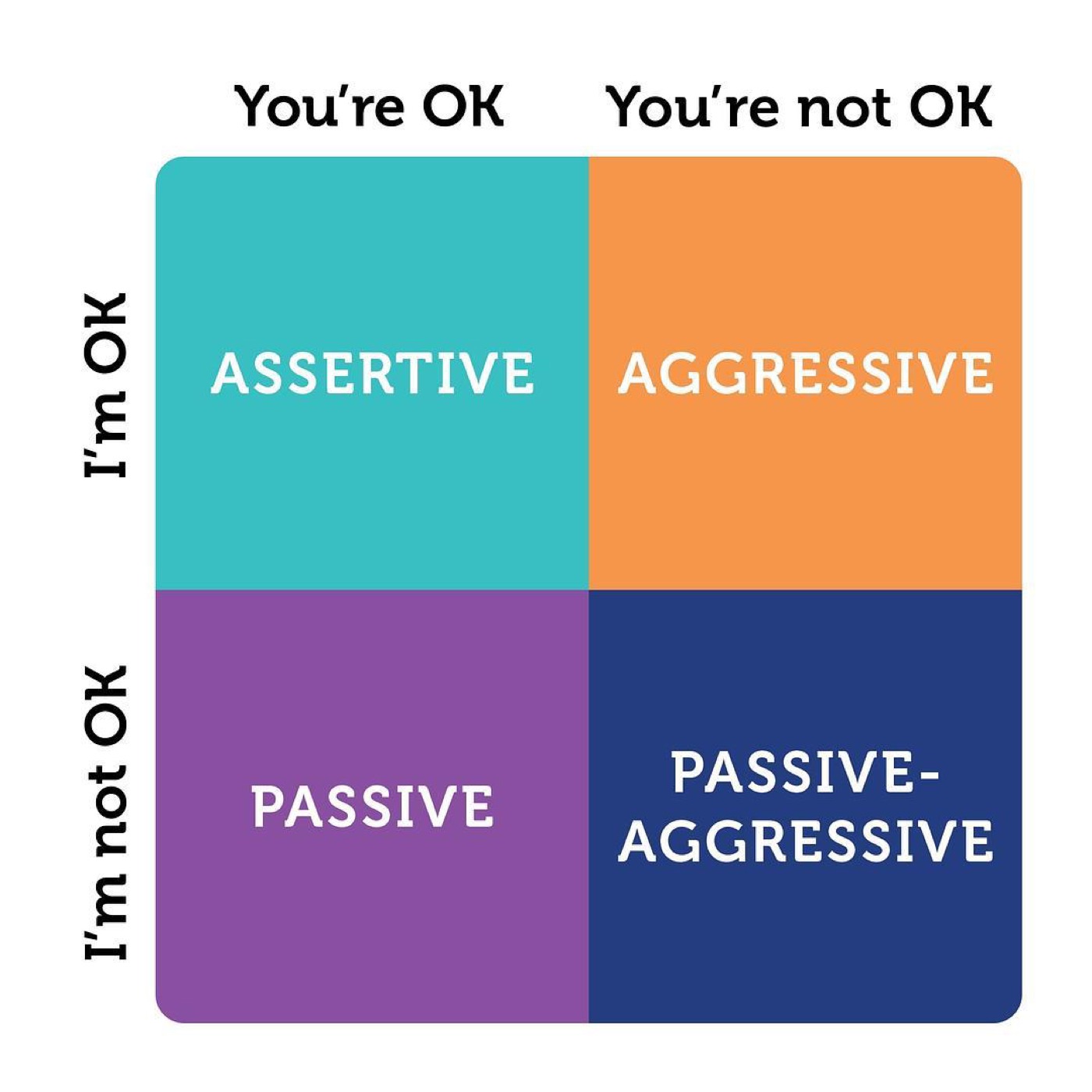
👉 The challenge: staying in the assertive quadrant — clear and respectful, to both yourself and others.
🛠️ Feedback & Assertiveness Models
Here's how some of the most practical frameworks break down:
1. DESC
- D = Describe the behavior you observed
- E = Express how it made you feel
- S = Specify what you'd like instead
- C = Consequence explain what happens if things change or stay the same
⚠️ Watch out: "consequence" should be about impact, not a threat.
2. SBI
- S = Situation where it happened
- B = Behavior you directly saw/heard
- I = Impact it had on you, the team, or the outcome
⚠️ Watch out: keep it factual, avoid "you always/never."
3. ECHO
- E = Effect of the behavior
- C = Cause explore what might have triggered it
- H = Help offer your support
- O = Outcome define the desired change/result
⚠️ Watch out: don't rush into "Help" before exploring the cause.
4. CANDID
- C = Context of the situation
- A = Action that took place
- N = Need that wasn't met
- D = Desire for improvement
- I = Impact the action had
- D = Do differently — what to try next time
⚠️ Watch out: this can feel heavy if you overuse detail. Keep it human.
5. BOOST
- B = Behavior you noticed
- O = Outcome that followed
- O = Opportunity for improvement or growth
- S = Specifics on what to change or keep
- T = Thanks to acknowledge the effort
⚠️ Watch out: skipping "Thanks" drains motivation.
6. STAR
- S = Situation you're talking about
- T = Task that needed to be done
- A = Action that was taken
- R = Result that came out of it
⚠️ Watch out: keep it short and clear — it's not a full story.
💬 Beyond the Models
- Nonviolent Communication (NVC): puts empathy and needs at the center.
- Thomas-Kilmann (TKI): helps you see how assertiveness and cooperation balance in conflict.
- The Assertiveness Grid: a compass to notice when you slip into passivity or aggression.
🌟 The Truth?
Assertiveness isn't really something you add — it's more about showing up as yourself: anchored, confident, and respectful.
With practice, it becomes less about the model you use and more about the presence you bring.
👉 Curious to hear:
- Which of these feedback models feels most natural to you?
- Where do you see your own growth edge in becoming more assertive?